Anyone can claim their AI runs things. The honest test is whether you can watch it work. Mission Control is the lab's live operations console: every agent's decisions, milestones, errors, costs, and health, rendered from one permanent timeline. The operator supervises from here instead of working a production line — and when something breaks at 3 AM, this is where the evidence already is.
Built on the Watch
The console is a window, not a database — what it looks through is Clark's Watch, the permanent event timeline every agent in the system writes to as it works. Because the memory layer already records everything, the operations console is "just" a renderer: dashboards, charts, and feeds over events that exist whether or not anyone is watching. That ordering — memory first, dashboard second — is the design decision that matters.
The dashboard
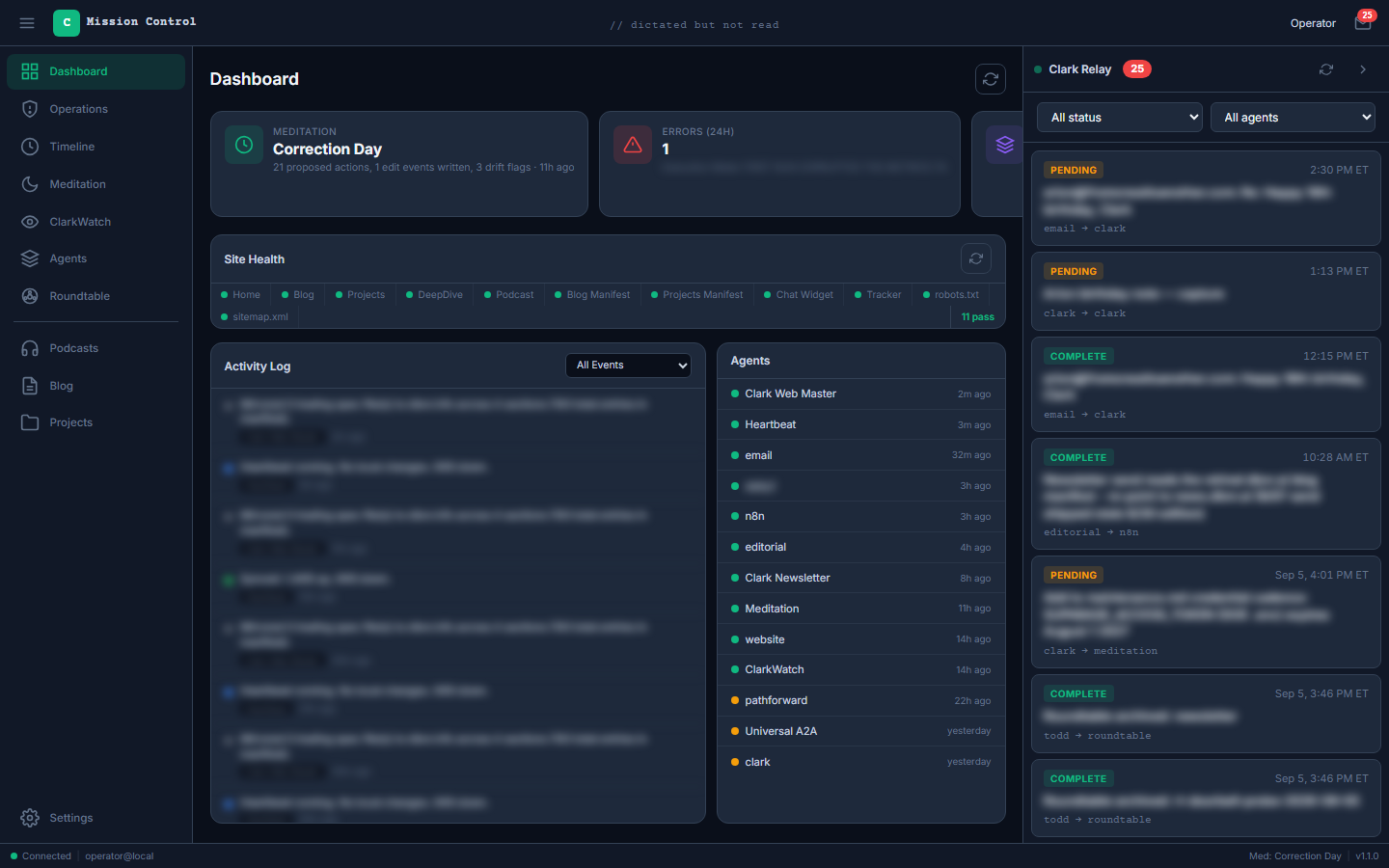
Top-left is the report from Meditation, the nightly self-maintenance process — proposed actions, memory edits, drift flags — because the first question every morning is "what did the system do to itself overnight?" Beside it, the 24-hour error count; below, live health checks against the public sites; on the right, the relay bus where agents hand each other work.
The operations room
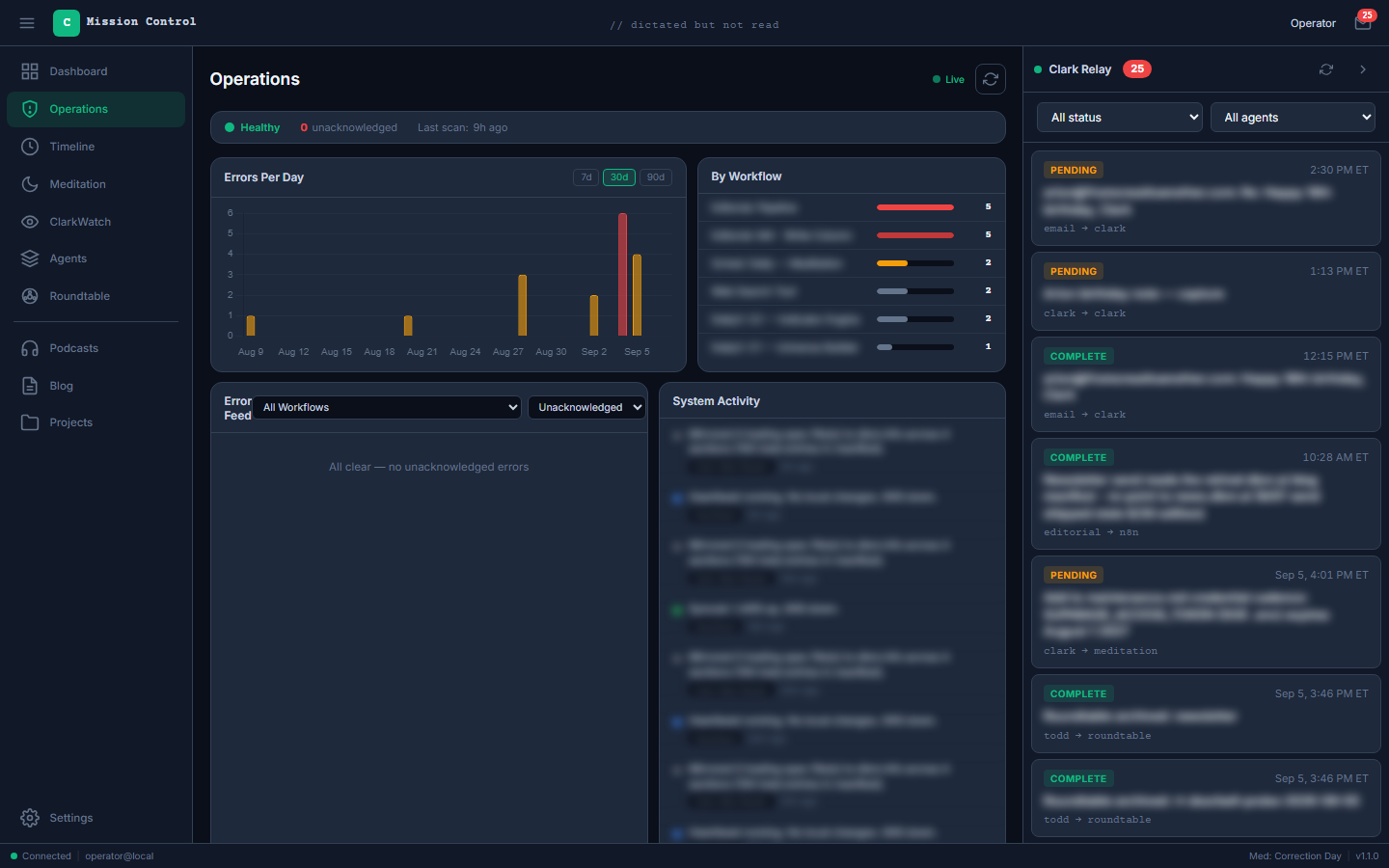
Every error any workflow throws lands here and stays until a human or an agent acknowledges it. The same view meters execution costs — actual dollars per workflow per month against the plan — because an AI-run operation that can't read its own utility bill isn't running anything.
The staff, as they see themselves
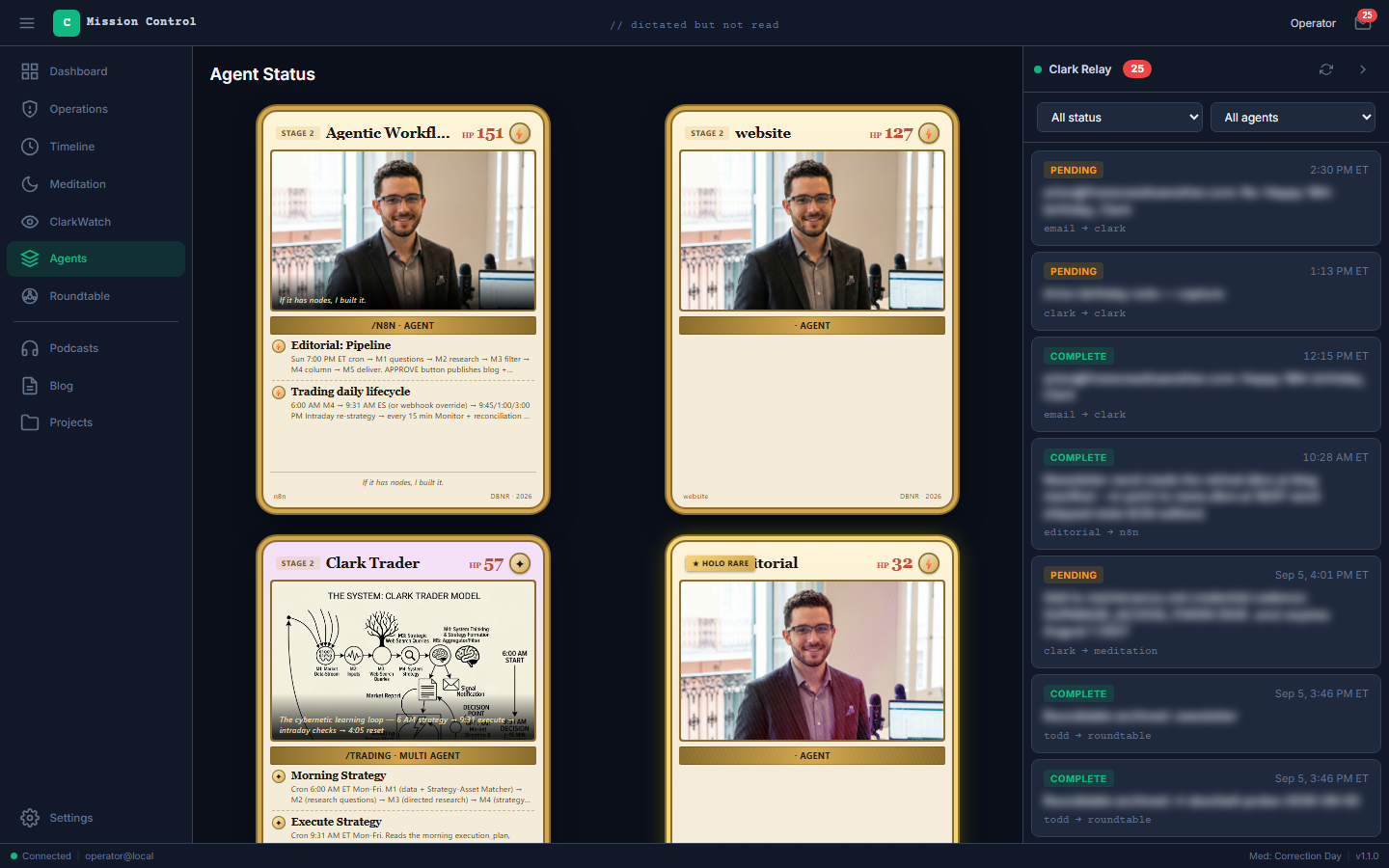
The lab's capabilities develop distinguishable working personalities, so the roster renders them the way they deserve: collectible cards with earned stats. HP counts real sessions from the timeline; stage badges reflect real tenure; the flavor text is written by each agent about itself. It started as a joke and became the truest org chart we have.
Why it stays private
Mission Control is where the whole operation is legible — which is exactly why it's behind a login. Operations rooms have doors. What we share publicly is the window itself: the architecture, the discipline, and the receipts — on the autonomy research page and in the findings archive, where the failures this console caught are published with their fixes.
Live · Private Screenshots: September 2026